Notes From A House Frau I

Something strange has happened to me now that I am spending so much time at home. I just want to get rid of stuff. Like, all kinds of stuff. I want to clear up, clean out, and reboot. Maybe that’s what happens when you have a near-death experience. You simply want to take all the crap out of your life and symbolically take all the crap out of your system too. It’s been a short weekend to a long week — not a lot of visitors this week, which was good. I really needed to rest, but I am also starting to get bored of being in the house all the time, which isn’t surprising. The other day, we walked to the Dufferin Mall and that was actually my favourite walk of the week. Not because we were in a mall but because we had great conversations along the way and my RRHB made me laugh. In fact, the two of us being at home so much has brought out a lot of patience and heightened sense of humour. There’s a comraderie between us when it comes to the RRBB — there’s patience and understanding, the odd sharp word or misconstrued tone/meaning, but for the most part, it’s been really terrific to have this time together.

Anyway, that’s not the purpose of Notes From a House Frau. I’m trying to find ways of fitting my own life back into this new life we have created. Whether it’s getting a closet back in order or finding a moment to write a new opening sentence to my novel (it was recently rejected by not one but two agents; I’m not giving up — both of their feedback was excellent but I can’t say I’m not disappointed). There has to be a way to balance what I want out of life, all of the things I had planned pre-RRBB and what I know I need to provide for him. Tips, tricks from experienced mom/writers out there?

On the whole, I haven’t found a good moment or a good writing routine yet. Colour me silly for imagining that would be the easiest part of mat leave — that the baby would have to nap sometimes and I’d be all awake and intense and ready to go. Writing for me is an amazingly slow process. I mean, I write quickly, but it takes me a long time to get what I write, well, right. I know the problems with my book and how to fix them, now I just need to find the right house frau routine to work that in with the other more intense things I’d like to do in a day.

It’s amazing how just accomplishing one or two things from your to do list makes you feel like a regular person despite the muddy, foggy loss of true distinction between night and day. Right now baby has those mixed up and therefore so do I — I take my iPad to bed and get email finished at 3 AM. I’ve got a whole whack of projects, knitting projects, getting out my mum’s sewing machine and sharing my writing desk with it, clearing out all kinds of crap I’ve been carrying around for decades. I mean, I don’t need my Nancy Drew books. I’ll never re-read them and RRBB won’t either — as it’s a well known fact in my industry that girls will read boys books but boys won’t do the same, so out they go (to a very good home and a very lovely girl, mind you).

The disease has taken its toll on me in so many ways. At the height of the baby’s fussiness, I sent an email to a friend stating, “How did you do two, TWO!” and she wrote back, “How have you almost died X number of times and survived!” It’s all a matter of perspective. Right now, my world consists of very little sleep, a lot of words bashing around my head, plenty of unread Globe and Mails, and entire bookshelves full of titles I am going to work my way through. I’ve gotten my reading back or, rather, I’ve managed to fit that back into my life, now I just need to find a nook and a cranny for the writing because if I don’t get this book done and dusted this year I might just have to shelve it — and I don’t think I want to do that at all. There’s value there, there’s a book there, it just needs another draft. And maybe an agent willing to work with me to get the book into better shape.

I also would love to start writing articles again. I miss that a lot — I did a lot of it when I worked for Alliance Atlantis, lifestyle-type fluffy pieces on road trips and lipsticks. The first one I would pitch, should I ever pluck up the courage to actually pitch anyone, which so isn’t me, is a bed rest/hospital stay survival guide for high risk pregnancy women. It’s such a hard situation. When I was on the 7th floor of Mt Sinai there were women there for months. I mean MONTHS. Can you imagine spending that much time in a room you have to share with another person or, at the worst, three other people. Walking the same hallways, eating the same poor excuse for food, finding a way to feel human isn’t easy in those situations — everything about it makes you realize just how sick you are, and the implications for your mind when your body is failing are very hard to come to terms with, especially with 52 doctors coming in and out on a regular basis. Somehow, I think it would be a good story for people to read — mine, but I’m not sure how or where it could go.

Anyway, I cleaned out a closet yesterday and it was very rewarding. It added more items to the rolling to do list, which is the greatest organization invention of all time as every intern who ever worked for me knows (I make all of them do them), but I now know where my other Michael Kors strappy sandal is, and that actually felt like an accomplishment. Not that I have anywhere to wear them, but at least they’re a pair instead of being stranded and lost within my own house.

My second favourite photo of RRBB. He’s finally started to semi-enjoy the bath.

#56 – The Senator’s Wife

My bookshelves are lighter by another title this weekend as I finished Sue Miller’s The Senator’s Wife this morning while feeding the RRBB (well, technically he had finished and fallen asleep and I was approximating life before him by staying in bed and reading, one of my favourite Sunday pastimes). It was an interesting novel to read as one of the main characters, Meri, a woman approximately my age, gives birth to her first child and for the latter half of the novel somewhat loses herself in terms of having to redefine her life now that her son, Asa, is in the picture. The senator’s wife of the novel’s title is Meri’s next door neighbour, Delia Naughton, an older, graceful woman, whose character reminded me a little of Jackie Kennedy, whether or not that was Miller’s intention.

As the novel moves back and forth through time from the perspectives of both women until the ultimate climax, you get the sense that Miller was trying to create a very domestic kind of drama. Most of the action of the novel takes place in the semi-detached houses that the two women share (that’s not to say they don’t leave nor do they have jobs: Meri works at a radio station as a producer; Delia volunteers during the summer months at an historical house in town) and it’s a book that’s very much about the lives of these two women as they relate to their husbands, their children and each other.

From the beginning Meri’s obsessed with Delia. For years, she’s lived a very separate life from her husband, Senator Tom Naughton. A ceaseless philanderer, their marriage was ruined years ago, but they have maintained an interesting, connected relationship regardless. Meri and her husband Nathan, newly married, make the transition from lovers to that deeper bond that develops over time when you’re married. And the novel explores all of these domestic issues: how children change a relationship, what it means to sacrifice your sex life as your body, your desire, your life changes; and how Meri comes to terms with all of this after the birth of her son (can you see the parallels, can you!).

It’s interesting because while this is a women’s novel, and there is literary merit to Miller’s writing, it’s also not truly the kind of book that I would enjoy. It’s something I’d recommend to my aunt’s book club — a book that they can relate to in their personal lives, something that would generate a lot of discussion over a glass of wine about the value of monogamy, the fatal flaws in Meri’s character, and how Delia’s mistakes finally drive her to becoming a much stronger, even more independent woman finally free of the bonds she didn’t even realize were holding her back.

Yet, there’s not an ounce of chicklit in this book — and I’ve finally figured out why — there’s no melodrama. There’s no obvious heightened emotional situations meant to manipulate the reader. I was comparing this book while reading to Jennifer Weiner’s Fly Away Home. Both protagonists have politicians for husbands who cheat on them, but in Weiner’s novel, the sheer over-wrought-ness (I know that’s not a word) of the situation carries the novel away for me. Miller’s book is far more grounded. The women are more mature, if that makes any sense, more complete, because they’re more fully rounded and realized characters — they’re not situations masquerading as people, which is often what happens in chicklit, authors mistake the need for a certain kind of plot and plop in a character that fits the description of where they want the novel to go.

That doesn’t happen in The Senator’s Wife. It’s more of a meditation of home, of what it means to build a family, of what family means, of what marriage means, of what you need to sacrifice for your children, for the life that you want to lead, and how love informs it all in ways that neither women can control. The journey to self-realization for both Meri and Delia takes the better part of the book and that either women becomes the catalyst for the other to get there is not lost on the reader. The situation that finally spurns them both forward seems so innocent as it begins and then it ultimately reads as a subtle, yet brutal, form of betrayal. Yet, it’s something that they both needed to go through in order to fully realize who they are — who they needed to become. That this kind of self-realization needs to happen to women in their 60s as much as women in their 40s, their 30s, is an interesting theme that runs throughout the book.

The Senator’s Wife is a solid, readable novel, but not something I’d recommend as my “best books of the year” or anything. It’s a quiet book, with quiet implications, and in a way, that makes it perfect for the 2 AM reading slot that occupies my nights these days.

What’s up next? I started Little Bee by Chris Cleave — see, this clearing off the shelves challenge is absolutely working! I’ve gone through almost three novels this week.

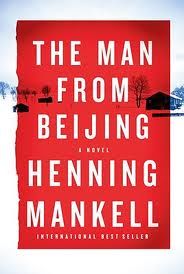
#55 – The Man From Beijing

Henning Mankell writes gripping, engaging novels and, for the most part, I’ve enjoyed every one of his books that I’ve read. And there were aspects to The Man from Beijing that I enjoyed but overall it really wasn’t as successful as many of his other novels. It’s a stand alone, so not a Kurt Wallander mystery, and it’s full of fascinating details about China, early development of the railroad in the US, the migrant/slave workers and colonization.

The novel opens with a lone wolf tracking the scent of blood, human. A man lies dead in a remote village in Sweden. In fact, the entire small hamlet, with few exceptions, is brutally murdered. And there is no apparent motive for the crime, no reason an entire village should be brutally slayed — the likes of which have never truly been seen in Sweden before. The police can find no motive and the only link seems to be the fact that all of these people lived in the small, remote village.

When Swedish judge Birgitta Roslin hears about the killings in Hesjovallen, she realizes that she has a connection to the victims. Her mother’s foster parents lived in the hamlet, and her mother grew up one of the houses where the massacre took place. In a way, she’s somewhat related to the people who were murdered, and Roslin discovers that they were all relatives of the Andren family…and soon suspects that something much larger is going on than a madman gone wild with a machete. Although, as you plod (and I mean plod) through the complex backstory, you discover why it’s so much easier for the police to arrest their suspected madmen than to believe what actually happened, and why.

Partway through the mystery, Mankell digresses into a narrative that follows the story of a young Chinese man in 1863. As he and his two brothers make their way to Canton, poor, starving, looking for work and food, they are confronted with the harsh reality of life. San, the protagonist, and Guo Si and Wu, are forced from their village and sent to wander. Like so many, they end up in a crowded city hoping to find a new life. They come upon tragedy after tragedy, and eventually San and Guo Si are captured, stolen and forced to become slaves building the railroad in the US. It’s an impossibly hard life and as the novel progresses you understand the true toll progress takes in human life. In the end, San finds his way back home, but not before horrible things happen, things that would make a weaker man question whether or not he was cursed. How does all of this fit in to the massacres? Well, it would spoil the novel too much to truly explain, but let’s just say that some of the things that happen while San is working on the railroad are avenged years later by one of his descendants.

Eventually, Roslin figures out there’s a link to the murders with China and sets off to uncover exactly what happened. It’s a dangerous thing to do, and she’s really not aware of the kind of trouble she’s stepping in. I enjoyed Roslin’s character — she’s tough as nails, smart, and doesn’t stand for any messing about. But I’ve always had a problem with revenge plots. I think they are the weakest in terms of thrillers — I don’t like them in movies and I’m even less fond of them in novels, which is why this book sort of fell flat for me. It’s not a page-turner, and at 2 AM when you’ve got a RRBB feeding away, you need something active, and fascinating, to peak your interest. That’s not to say that the novel isn’t well researched and that the information contained within isn’t valuable, I’m just saying it didn’t all fit together as nicely as one would have expected from a novelist as solid as Mankell.

In the end, the parts of the book that I liked the best were the ones where Birgitta was out and about trying to solve the mystery. I doubt that Mankell will develop a series around the character but I do have to admit that I really, really liked her and wanted more from her in the novel. The far fetched nature of the entire book just didn’t ring true despite Mankell’s excellent prose and I was disappointed in the bad guy. He seemed very Hollywood, a little too Gordon Gecko for my liking, but I did learn a lot about China, or at least Mankell’s version of China, and the very interesting political things that are happening these days — in that sense, the novel doesn’t disappoint.

And, because Mankell’s Swedish, here’s another book that counts for my Around the World in 52 Books challenge. One day I’ll tally everything up. I’ve got four weeks left in the year. Maybe I’ll get caught up on all of my reading challenges. Um, yeah, right.

The End of Life Outside My House – A Top 10 List

Seems like I am starting to feel a bit better. I have good days and bad days, today I am weepy and feel heavy with disease, but yesterday I felt terrific, and the day before that I walked as far as I have since leaving the hospital, all the way to Ossington from our house, which is at Dundas and Brock. But the days are blurry and there’s little difference between one half and the other — time just stops in a way, even as it moves along. I have lists, I don’t finish them. I have things to do, but I don’t do them. I have so little energy but as least they are all slowly getting done. No pressure, that’s the trick.

1. The Walking Dead is an excellent, and not too, too scary zombie show. My RRHB tried to get us to watch another zombie show, made by the BBC about a Big Brother-esque reality show that gets invaded by the chompers but I couldn’t stand it — it was terrifying. But I like the story they’re presenting and the characters in the AMC drama. It’s a PVR keeper.

2. I am not ashamed to say, well, actually, I am ashamed and embarrassed, but I’ve started taping BOTH Oprah and Dr. Oz. Yes, I am that cliched house-frau at the moment. But at least I won’t miss J-Franz on Monday and today I learned that willow bark supplements might stop the creaking in my knees. See, useful, even if you’re only half watching and half either breastfeeding or trying to get caught up on blogging.

3. There was a time where I watched movies. Now, I watch portions of movies. And haven’t seen anything good in weeks. Any suggestions? I miss movies. We have, however, been watching the boxed set of Prime Suspect, and it is excellent. Truly phenomenal. In fact, I half-watch just about everything. Television shows, especially. Often, I fall asleep.

4. I have not finished a cup of tea since the RRBB was born. Or a sentence. Or a blog post in one sitting. Or a household chore. In fact, if I get one thing done a day from my rolling to do list, I feel like I have run a marathon. Time melts when there’s no significant difference between day and night. That’s not something they tell you when you’re pregnant.

5. Law and Order: Los Angeles is a pale, pale, pale, pale replacement for the mothership. The closest you can get these days is Law and Order UK. Hell, it’s got Apollo from BSG on it, and Danny Baldwin from Corrie Street, and they are both aces. It doesn’t even matter that they’re simply reversioning old Mothership episodes for a UK audience. We still watch it every week. It might be my favourite show. Either that or Cougar Town, which I adore. Don’t judge.

6. Before I came home from the hospital with the RRBB, we had carpet installed upstairs. It’s so cozy and awesome. There are many plusses to having carpet in your bedroom and in the hallway when you walk down after having a shower. But to prepare, my RRHB had to move all of our furniture and all kinds of other life rif-raf from the upstairs. We had friends and family help him, which means our stuff is spread out all over the house. ALL OVER THE HOUSE. I can’t find anything. We didn’t even know where our camera was (has since been found) so Sue, my nurse in Labour and Delivery at Mt. Sinai, had to take pictures of RRBB’s birth. They’re great shots. I am glad we have them. But how unprepared is that? The carpet was literally being laid at the same time they were, ahem, putting some gel somewhere to get things started. We just didn’t expect him to come so soon. Hence the fact that I have one, that’s right ONE, outfit that’s fit for more than a walk around the block and it’s still maternity clothes. Hopefully doesn’t look too, too like I’m still pregnant but I literally have nothing else to wear.

7. Speaking of clothes. I have lost all sense of self respect. These days, a perfectly acceptably outfit for a walk to the grocery store: no bra (don’t ask; it’s a disaster) or the one nursing bra that I bought from the hospital breast feeding clinic store because I was trapped in the hospital for three weeks; a pair of blue jogging pants, with extra long legs, so I need to TUCK THEM INTO WORK SOCKS; sneakers and a sweatshirt and/or, well, a different sweatshirt.

8. Often, I’ll wake up with a terrifically itchy head. Like, I’m convinced I’ve got lice or we’ve got bed bugs or a terrible case of dandruff. No. It’s none of those things. It’s just the fact that I haven’t washed my hair in gosh-knows how long, like over a week, and hadn’t noticed. Oh, I’ve had showers. But I can’t even seem to remember to wash my hair when I’m under the water and in the tub. IN THE TUB.

9. No more books until I read everything in the house that I haven’t read. I am making a promise to myself. So far, it’s going well. But Amazon.ca is very hard to resist. VERY.

10. I’ll have to say that it’s lucky I am breastfeeding. It’s definitely combating the prednisone appetite. It’s not, however, doing anything for the other side effects for the meds. The puffy face. The hair falling out. The crazy dreams. The weepies. But, for the first time in a long time, I don’t have the psychosis. And that’s a first. There’s a silver lining in every single cloud, right?

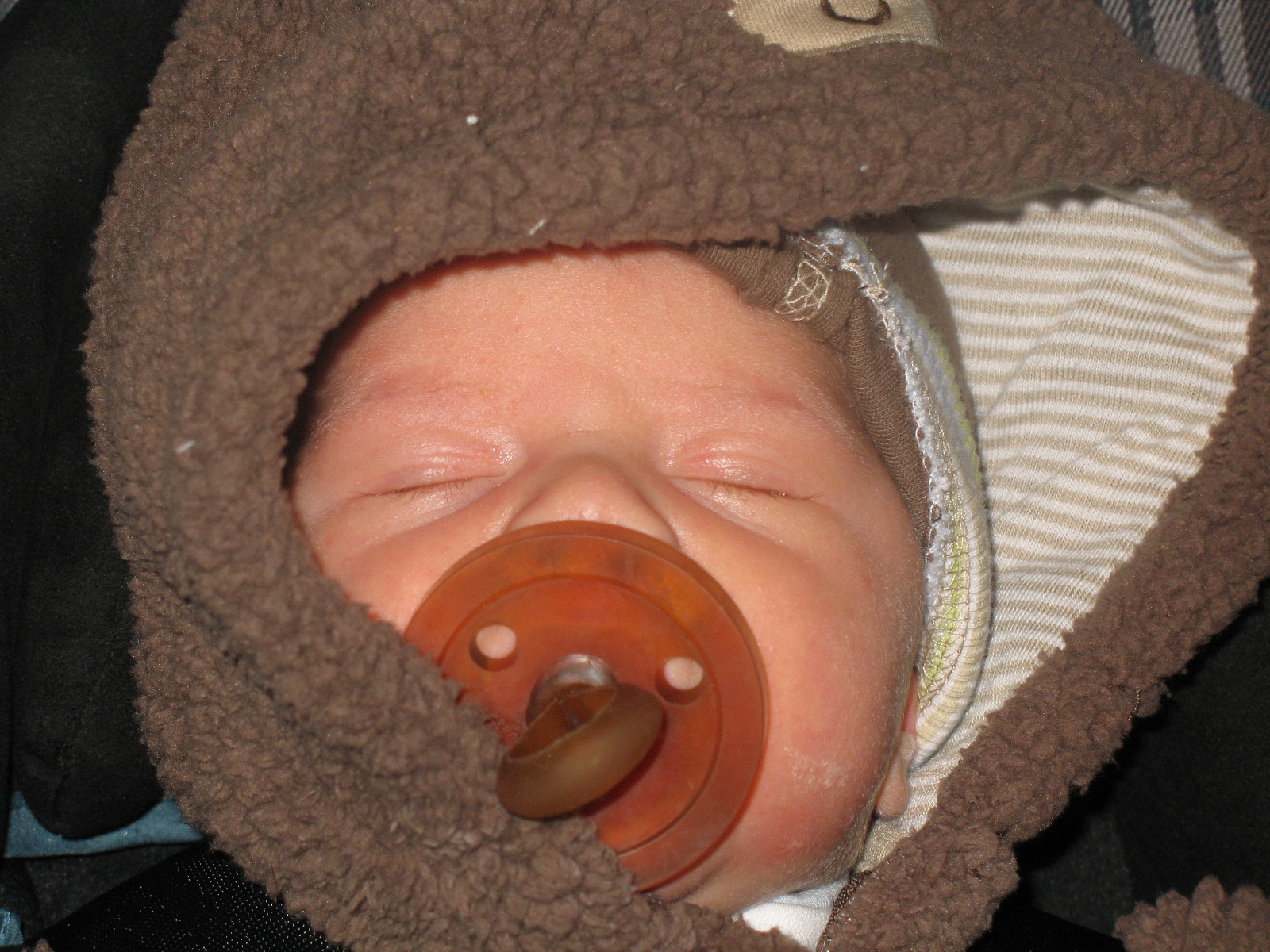
10.5 This is my favourite photo of the RRBB we’ve taken so far.

Around the World in 52 Books – 2010-2011

Instead of trying in advance and failing miserably to get through the books/countries on a predetermined list, I am going to simply keep track of the titles that fit this challenge and see if I make it to 52 — starting December 1, 2010 to November 30, 2011.

I wish I had a pushpin map where I could mark things off one by one, country by country, but I’m not sure Blogger has such a plug-in…

Around the World in 52 Books

1. Sweden: The Man from Beijing by Henning Mankell.

2. England: Little Bee by Chris Cleave.

3. Ireland: A Long Long Way by Sebastian Barry.

4. Norway: Calling Out For You! by Karin Fossum.

5. Zimbabwe, Blue Shoes and Happiness by Alexander McCall Smith

6. Nigeria, Purple Hibiscus by Chimamanda Ngozi Adichie

7. Dominican, In the Time of the Butterflies, Julia Alvarez

The Off The Shelf Challenge – 2011

The only reading challenge I am going to set for myself, with the exception of Around the World in 52 Books, because even if I never get there, I think it’s important to keep reminding oneself to read books by authors from countries other than one’s own, is The Off The Shelf Challenge. I have so many unread books lining beautiful bookshelves that I have collected, bought, got, asked for but never read, and always meant to get around to, that I am determined to try and read as many of them as possible, then pass as many of them as possible along to other people, throughout this mat leave year.

Instead of listing them in advance, I’m just going to keep a running tally here, starting this month of the books that came off the shelves vs. new books coming in that I have purchased or read for book club.

1. The Senator’s Wife by Sue Miller.

2. The Man From Beijing by Henning Mankell.

3. Little Bee by Chris Cleave.

4. The Post-Birthday World by Lionel Shriver.

5. A Long Long Way by Sebastian Barry.

6. Calling Out For You! by Karin Fossum.

7. Payback by Margaret Atwood.

8. Pearl by Mary Gordon.

9. Amy and Isabelle by Elizabeth Strout.

10. The Keep by Jennifer Egan.

11. Abide with Me by Elizabeth Strout.

12. The City Man by Howard Akler

13. Weight by Jeanette Winterson

14. Purple Hibiscus by Chimamanda Ngozi Adichie

15. Emma by Jane Austen

16. Showbiz by Jason Anderson

17. Pretty Little Dirty by Amanda Boyden

18. In the Time of the Butterflies by Julia Alvarez

19. The Lemon Table by Julian Barnes

20. You or Someone Like You by Chandler Burr

#54 – Started Early, Took My Dog

Kate Atkinson remains one of my favourite writers. I will drop any other book I’ve got for her new novel — she’s a lot like Laura Lippman in that way. She writes engrossing, utterly readable, quasi mystery books with flawed protagonists (ahh, Jackson, I knew exactly when you showed up in the narrative and it actually made me smile) and great, rollicking plots. In her latest, Started Early, Stole My Dog, Jackson Brodie is no longer a true private eye, semi-retired but working the odd case, he’s on a road trip inspired by a case: a young woman wants to find out more about her birth family. Seems simple, right? But, of course, this being a book with Jackson Brodie as the main character, there are twists, turns, and some solid punches before he gets to the bottom of the mystery.

There are plenty of other stories woven into the narrative… a retired DCI, Tracy Waterhouse, does something so out of character, she has to go on the run. And then, she’s chased. The group of police Waterhouse worked with, the old boys’ club, has something to hide that Jackson stumbles upon. Lastly, an actress on her last legs, literally, as her mind starts to wander due to dementia, and the way her final action turns the tide on the entire story feels shocking, to say the least. Of course, Jackson, even when he tries his damnedest, can’t stay out of the middle of all of it, and how Atkinson pulls it all together remains impressive throughout the novel.

It’s the kind of novel that you can read in one sitting, the perfect for a book-a-day challenge. It just breezes along, pulls you in from the beginning and doesn’t let go of your hand until you’re absolutely on the last punctuation mark of the very last page wishing that you didn’t read so bloody fast. There’s really not much more to say except I thoroughly enjoyed this book, and won’t spoil it at all for those of you who haven’t discovered Atkinson yet.

Lastly, she was born in Scotland, which means that Kate Atkinson’s novel counts as another Around the World in 52 Books, which means, maybe I’m at seven or eight now… Yay!

#53 – The True Deceiver

Trying to read more books published by NYRB remains one of the never-ending “should-do’s” on my reading life. I admire just about everything about the publishers: the packages they create, the books they choose to publish, the authors they choose, and the quality of the writing. Yet, I never seem to get around to reading, well, ANY of them. So, I was pleased when our book club, The Vicious Circle, picked Tove Jansson’s The True Believer as a monthly pick.

Tove Jansson was born in Helsinki, and she was an illustrator as well as an author. She grew up spending the summers on the Gulf of Finland, in a small fishing cabin, and the setting of The True Deceiver seems absolutely informed by the time she spent in that kind of an environment. The setting is stark, snow-filled, cold, and austere. The novel opens, “It was an ordinary dark winter morning, and snow was still falling.” The darkness isn’t frightening, it’s not meant to create the Let the Right One In kind of environment, it’s a fact of life, a season to get through — life still goes on, groceries need to be delivered, dogs need to be walked, boats need to built. I like how Jansson creates the setting, it informs and layers the story but it doesn’t overwhelm the novel.

The story revolves around two women who live in the small village. A strange, awkward girl named Katri Kling who lives above the general store with her brother, Mats (whom everyone thinks is simple but is truly just quiet and introverted). And Anna Aemelin, a relatively wealthy (as compared to the people in the rest of the village) children’s artist who is a bit of a recluse. From the beginning of the novel Katri has a plan — she wants to gain an “in” with Anna, she has a very specific, calculated plan to ingratiate herself into her life, and nothing will stop her from getting her way. The entire village thinks the girl is strange. She has a gift with numbers and with honesty, and so many people come to her for problems: is so-and-so cheating on me, was I charged too much by the grocer, is blah-de-blah taking advantage — the villagers are ashamed to ask for Katri’s help but they continually do it. With this premise, she begins to be helpful to Anna. There’s just one difference, Anna didn’t ask for Katri’s help, and doesn’t necessarily want it. She lives in her own kind of blissful ignorance, like the dark of winter, Anna closes herself up in her house, illustrates her woodland characters, idealizes the childish way she has of creating a world in the undergrowth of the forest, and wishes she could do it differently, but change isn’t something that comes naturally to Anna.

Eventually, Katri and her brother move in with Anna, into her house. Gossip starts. But as with anyone who sets out with a plan, things go astray. And the spareness, the sparsity of Jansson’s prose nicely echoes the setting. Her words are cruel when they need to be, sparingly kind in places, but always clean, if that makes any sense — she’s an incredibly clean, crisp writer, she sort of writes like the snow itself, cold, but melts when the temperature reaches a certain point. The title refers, naturally, to Katri, but it’s also pointedly about Anna, as well — deception when it comes to yourself, deception concerning another person, they are both themes that run from beginning to end. What’s simple doesn’t always seem so, and telling the truth, and then recognizing the truth about yourself, both happen to these characters by the end. Overall, I can’t tell you how much I enjoyed this novel, I read it quickly, in every spare moment I had, and I do have them these days, not necessarily to write long blog posts, but to read at 2 AM when the RRBB is breastfeeding. It’s very easy to balance a book on The Breast Friend, let me tell you, as long as it’s a teeny paperback. I’m having a little more trouble with my giant hardcover copy of The Man from Beijing by Henning Mankell.

Also, Jansson was born in Finland, which means I can use this book for the Around the World in 52 Days challenge I do every year. I am sure I have managed about six weeks in total, but, still, I don’t think I’ve ever read a Finnish author before. And I am sure I would read more of her books in a heartbeat considering how much I loved this one.

#52 – Tinkers

Paul Harding’s novel, Tinkers, won the Pulitzer Prize last year, and it’s a novel more than worth its success. First published by the Bellevue Literary Press in NYC, the novel will hopefully find a wider audience now that it’s being published by HarperCollins. Anyway, the publishing history isn’t really the purpose of writing a review on the blog, is it?

In a way, Tinkers will feel familiar to Canadians, it’s premise, an old man lays dying and reflects on his life, is one that we’re quite familiar with. If it were only called Stone Tinkers, it’d probably be a bestseller. The novel intertwines the stories of son and father, George and Howard Aaron Crosby, as George lays dying, system shutting down, in his living room. Surrounded by family, sometimes George knows what’s happening, sometimes his body betrays him, but Harding has a particular talent for writing his death honestly and without pretense.

Both George and his father are good, honest people, but that doesn’t mean they always make the right decision. Without necessarily wanting to spoil anything (and it’s written in the marketing blurb), they’ve been estranged for years when Howard, who is epileptic, abandons his family on the pretense that his hard, hard wife has finally reached the end of her rope with the burden of his disease, and is about to commit him to an institution.
Howard, a tinker, who walked the cold backroads of Maine with his cart selling anything and everything, simply turns in the other direction and doesn’t go home. He begins an entirely new and fulfilling life that seems at peace with his utterly good nature — but, then again, it’s not an honourable thing to leave your family behind with no way to support itself. But the way its written, you actually feel sympathy for Howard, you feel like it’s the right thing to do, and are convinced that everything will be fine.

George, a clock repairman, has led a happy, quiet life. Precision guides him, even in death, and as his body shuts down, its elements of machinery, the very same things that guided George through life, are failing. His mind wanders, he can’t recognize the family members by his bed, but he notices that his favourite clock isn’t wound. In this simple example, it’s apparent that one of the most moving aspects of Tinkers remains Harding’s ability to describe a body deteriorating into death. Tears came to my eyes more than once throughout my reading of this novel — I was reminded of my mother, of how her body failed in the few days it took her to die. Sometimes his descriptions were so apt that I felt the pain of the loss in my chest. To me, that’s the sign of an exceptional writer. Someone who can move you to remember or feel something so personal yet so unrelated to the story by the simple power of a sentence.

Harding attended the Iowa Writers’ Workshop, and worked with Marilynne Robinson, and you can feel her influence all over this novel. It’s quiet but intense, the characters are wholly good people with complex flaws, and the novel’s simple story betrays the power of the prose. Overall, I’d highly recommend this book — it’s a quick, emotionally satisfying read — it’s perfect for a rainy day when you have some time to spend just laying about on the couch. But have a tissue or two on hand…

#51 – By Nightfall

The moment you read the first few pages of Michael Cunningham’s excellent novel, By Nightfall, you are reminded of Virginia Woolf. It’s in his sentence structure, in the simple, effective way he uses description, and the way that time defines itself by almost disappearing throughout the narrative — I can’t help but think of Woolf when I read Cunningham and I don’t think that’s a bad thing.

By Nightfall, the story of Peter and Rebecca Harris, a middle-aged couple grappling with the state of their lives, their marriage and how they ultimately want to live, not just in the world but with each other, seems simple at first. But it’s full of complex human relationships and the politics of family — which is often just as dramatic than the politics of every day in the House of Commons. Rebecca’s youngest sibling, Ethan, called “Mizzy” as he was a mistake (their mother was 44 when she got pregnant), is coming to stay. Troubled, addicted, and having lost sight of what he wants out of life, Mizzy has come to NYC to stay with Rebecca and Peter to find himself. Apparently, he’s clean, but not for long, and a strange, awkward relationship evolves from his visit, something that changes Peter’s life irrevocably.

Peter and Rebecca have jobs in the arts — she runs a failing literary magazine and he a small gallery — and the premise of Mizzy’s stay is that he wants to investigate a career in the arts too, only it doesn’t come to that. He remains terribly lost throughout the entire novel and seeing the very gentle way he manipulates everyone around him is one of the most effective strains in the narrative. You know, in your heart, that you can’t trust an addict to tell the truth, to keep his word, to not fall off the wagon, but it’s an impressive way that Cunningham weaves Mizzy’s own capacity as a true deceiver into the novel. He’s a beautiful boy, one that can’t be resisted.

The moral conflict in the novel, the decision that Peter must make, for his relationship, for his livelihood, for the future, confounds him. He simply can’t move from the one place that seems to be forcing him to go. The crux of the novel, how simple it seems at the beginning, a book about a brother coming to visit, becomes so much more as it explores the past and present of Peter and Rebecca — how they met, what their days are like, what their marriage is like, and how they’ll continue after Mizzy’s eventual departure — truly feels complex by the end. It’s a quiet narrative but the writing is just so superior, so effective, that this novel might just end up being one of the best I’ve read all year.