The Work Boyfriend: A Novel

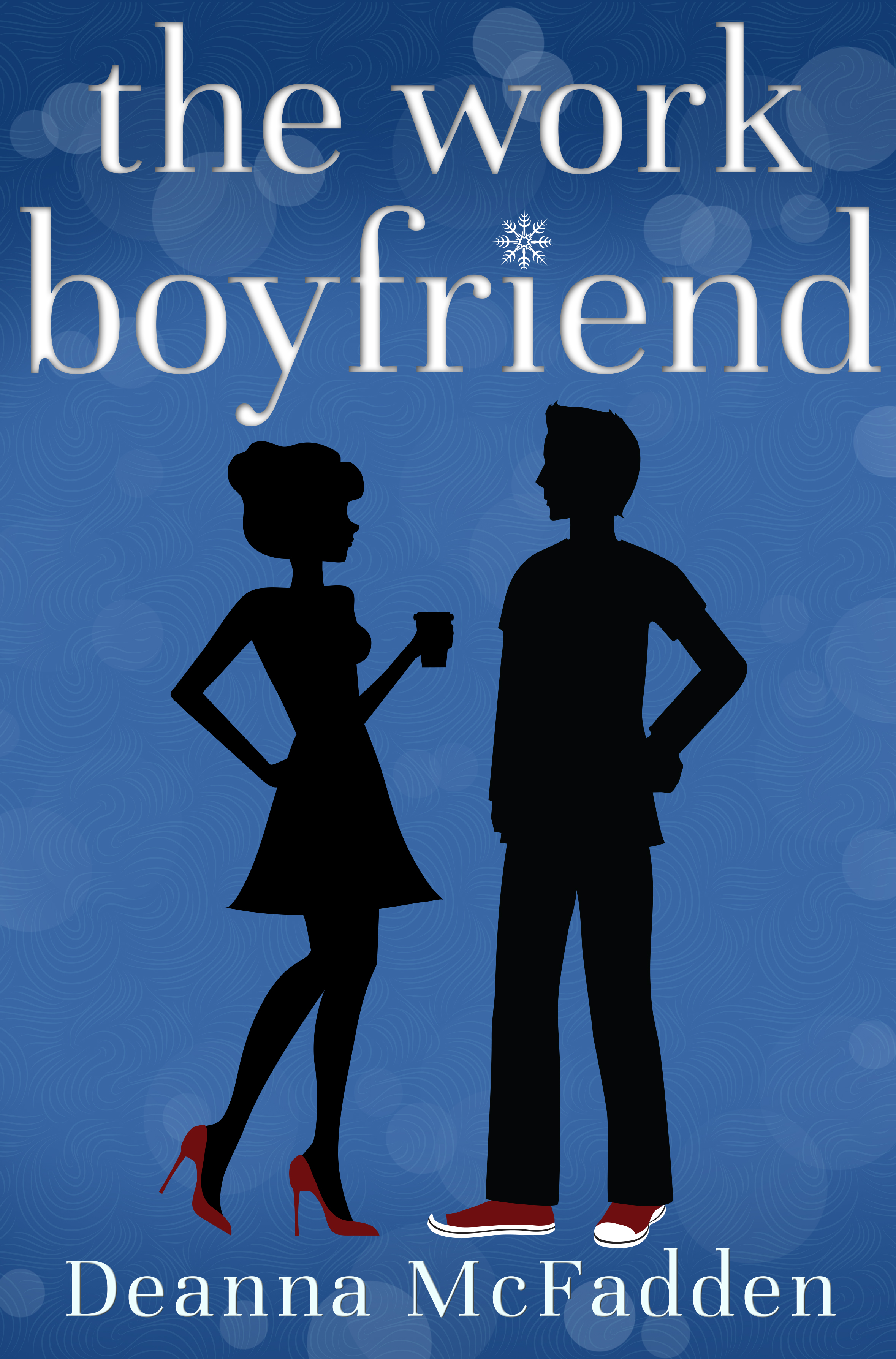
As a publishing professional, I’m curious about the changes in our industry, about the opportunities, and about platform. So, here’s our grand experiment. Written over the last couple years in the half-hour I had a few times a week, it’s a chicklit novel (with a bit of an edge) about a young woman trusting her instincts and carving out her life, on her own terms. Because I’m an ebook person, and because I have Rebecca Mills, my amazing partner-in-crime when it comes to this endeavour, we are trying out digital-only publishing.

So, The Work Boyfriend is in the world. It’s up here at Amazon, through Kindle Direct Publishing, and here at Kobo through their amazing Writing Life platform, here at Google, and here at iTunes.

Like I said, we’re curious to see how it all works. But, overall, I just wanted to prove to myself that I could finish something–and I hope for those who kindly decide to read it, that they enjoy it.

I have a million and a half people to thank, the aforementioned Rebecca, without whom the book would simply not be up at any of the vendors; my family, who loves me but, more importantly, puts up with me; especially my sister-in-law Denise and her friend Charlene, who read early drafts and were encouraging. Jessica Albert, who did our super-cute cover. My friends, who said go-go-go from the beginning, with a special shout-out to Nadine Silverthorne, without whom there would, literally, be no book. And work for giving me the okay.

Anyhow. I’m excited. And terrified. But thrilled to be continuing the indie spirit of our family, from my rock ‘n’ roll husband, who has played independent music for over two decades now. So, we’ll see how it all goes… publishing a book kind of like you would a blog–I like it, I think?

And P.S. The name of our company, Farringdon Road, comes from my British great-great-grandfather, who was a publisher in London–it was his place of business, sort of (we changed the “Street” to “Road” because we liked it better).

I Love This Photo Of My Grandmother

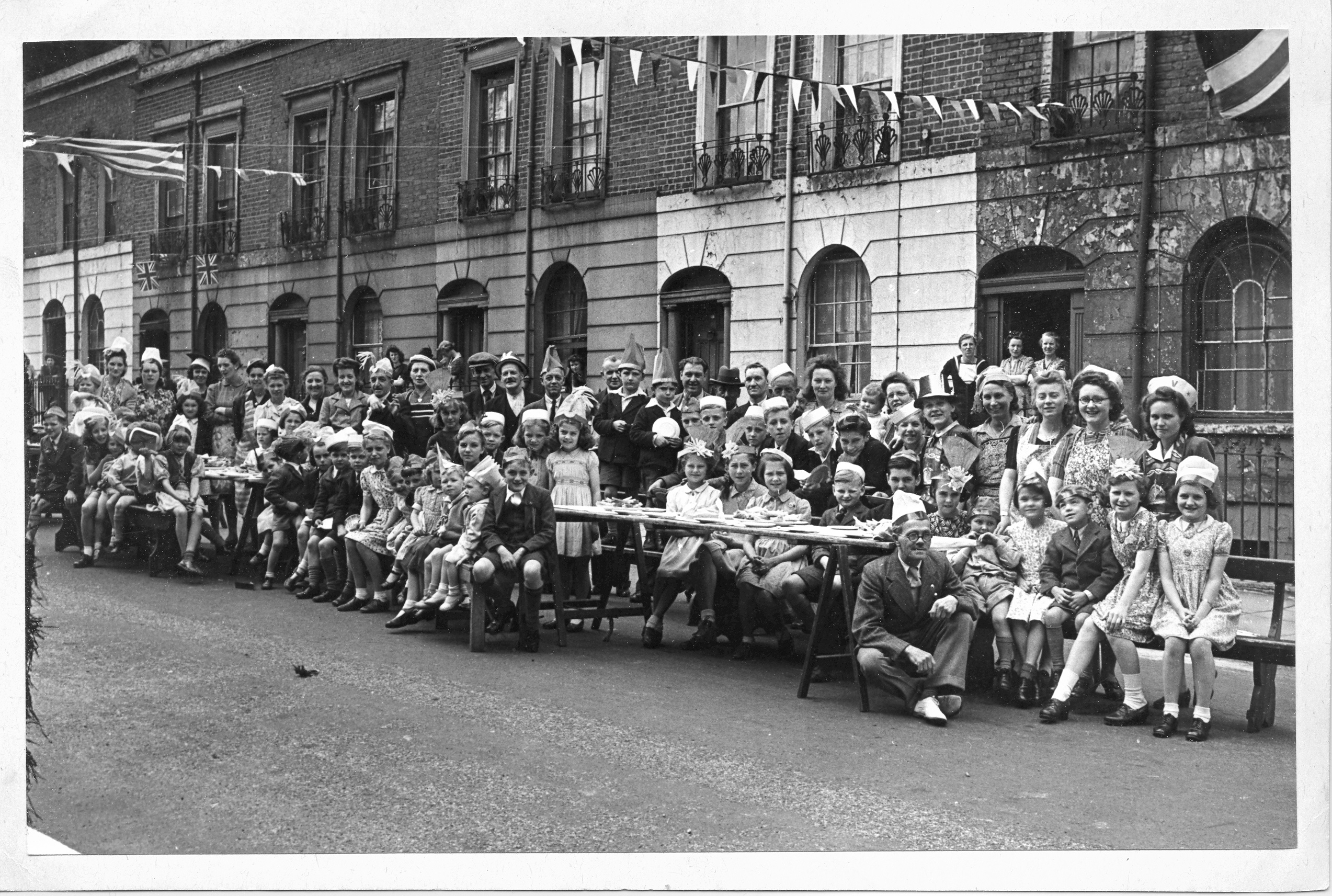
Funny, I didn’t even know this photo existed until this past summer, when my aunt showed it to me. There’s my grandmother, in the top-right corner, standing beside her mother, and beside my great-uncle, who was a member of the Canadian Navy (I think). The caption on the back says that it’s D-Day, June 1944–and I am nowhere, not remotely alive, but that’s okay.

That my grandmother had a life, an entire world away, before she came to Canada as a war bride and become, as I knew her, my Nanny, intrigues me. It’s a research project, to find out more, more, more about my grandmother’s life. I remember more of her, because she was alive, with me, for longer than my mother, but she’s no less enigmatic, because so many questions I have remain unanswered. Her’s was a hard life, one of supporting tragedy, of having lived through the bombs, and the Blitz, and of ushering in new life (my aunt!) in the wake of all that blew up, oh, those Boomers. What was to come? Losing herself to colon cancer, that runs in our family, her son to follow a decade later, losing her middle child to the accident, like we all did, widowhood, and raising her grandchildren as much as was necessary–and that’s the part that I feel like I can tackle now.

I did not know her in this photo, but I want to. I want to ask her what it was like to be in London during the war. What it must have been to go to work at fourteen, when she really wanted to stay in school. What it was to meet my grandfather, and to see your life in that first blush of romance, to spend all that time with someone that maybe you shouldn’t have been with, to be an only child, to be British, and then staunchly Canadian. To be private, to have lived a life inside yourself, and so responsible, even if life gets beyond you. These are all my questions. These are all moments that I wish I could go back and ask about.

My favourite memory of my grandmother, and there are so many, are of her playing invisible snap with some friends of mine from high school. Of her holding court over a crazy pile of teenagers in the backyard of our house on Chaumont Cresent, where we lived in Mississauga. The first time I had a drink (peach schnapps, I do not recommend it). The first of many times my house was invaded by piles of teenagers and, still, my grandmother had a spirit and a presence about all of it–letting me find my way, enjoying my friends, enjoying herself. Another moment in time: my head in her lap as she ran through family history with me, noting cousins, aunts, uncles. I still have the piece of paper where we mapped it all out. Since then, I’ve gone through a half-dozen more generations, tracing as far back as I can to somehow reach deep down and figure out who I am. I’m not there yet.

In that moment, right before she died, wearing an oxygen mask, and settled in her bed, I wanted to shout out a list of everything she saved me from when she stepped in during the first tumultuous years after my mother’s accident. She saved me, most of all, from myself. She gave me her spirit of adventure, and her tenacity. She cut my hair, and loved me fiercely, but quietly. She was firm, but strong, and had character that came from someplace I would never understand. She made my clothes, and tried to teach me how to knit, backwards, because I’m left-handed, and left behind a space that aches when it’s sunny, in particular, at the cottage, a place she loved.

No special anniversary to celebrate. No giant, sweeping epic. A few secrets, I’m sure. It’s again, more of the everyday that I miss. And that’s the rub, that’s the intensity of losing so many people that you love. You can’t appreciate the small moments, in detail, because they’re forgettable. And that’s the way it should be. You can’t climb back through time, because it’s impossible. You can’t remember everything. But there are moments when I wish I could slip into the photograph, and stand beside my grandmother, wear my own pinny, wave a flag, and shout out: “I was here. You were here. And I love you, desperately.”
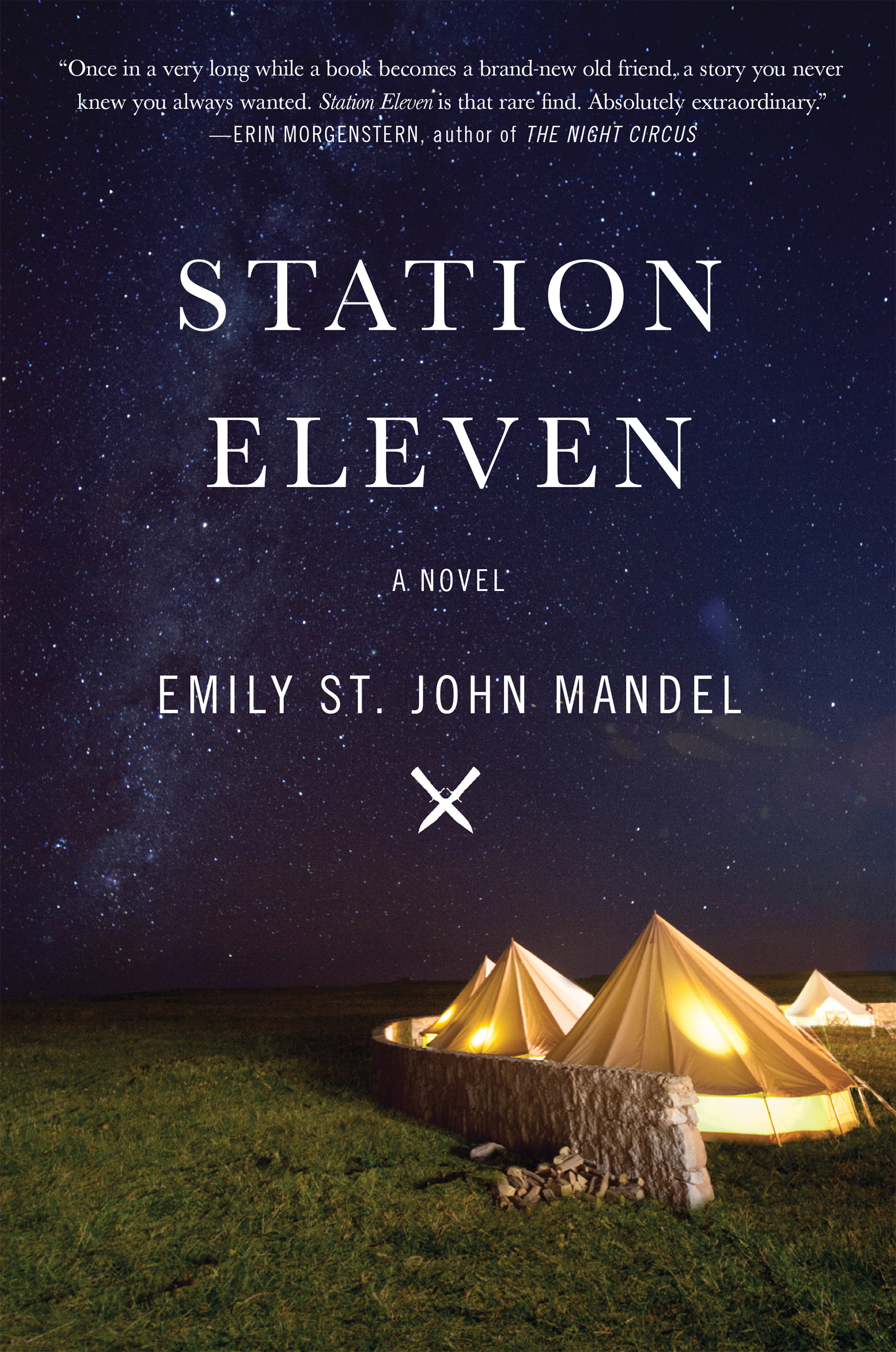
Station Eleven – Emily St. John Mandel

Picture the moment before a pandemic–what might that look like–people in everyday situations going about their everyday lives. Some are at the theatre. Some are walking home from work. Some are on a plane going somewhere. Coming home from somewhere. Stuck somewhere. This is the premise that opens Station Eleven, Emily St. John Mandel’s captivating novel. In the instant before the world collapses, one man falls down on stage–a renown and infamous actor, Arthur Leander–dead from an apparent heart attack. A young man, training to be a paramedic, hops up on stage to try and save him. He can’t. A young girl in the production of King Lear with him is deeply, profoundly affected by not only his death, but her association with the play itself. An ex-wife a world away who hears the news, doesn’t quite know what to do with it. And what Mandel has done here, sits with me, profoundly–because she has paused on the very moments before a calamity, and allowed her characters to stew in an everyday tragedy. Here’s the mark, the one event that would have scarred your life had it gone on as it should; instead, it becomes the punctuation, an ellipsis, that melts into a much larger event–the end of the world, essentially. And that to me is some smart, smart storytelling.

The Georgian Flu, an extreme case of a type of avian flu, hits the world and within a few weeks 90% (or some crazy number, no one really knows exactly how many) of the world’s population is dead. And with any pandemic, the life that’s left behind is forever “after,” so much so that the years are recalibrated as “Year One,” “Year Two,” etc., after the worst has passed.

Many of the characters in Station Eleven are artists, the members of the Traveling Symphony that roam a mostly safe route to perform, as a troupe would have in the days theatre first evolved, from place to place, looking for an audience. They are storytellers, hunter-gatherers of culture, roaming their way across a civilization that has lost everything. For me, while the threat of other people was always ever-present, it never really approached Walking Dead territory, where every human being puts up a kill or be killed kind of fight. This isn’t a post-apocalyptic situation that I’m used to–there’s Shakespeare in this world. There’s Bach and a museum, and a thread of the “before” in ways that feel as if Mandel means to point out that art is important. That said, the world isn’t without its dangers, and when members of their troupe go missing after engaging with a particularly fanatical prophet, it becomes apparent that the skills of the road, the necessary parts of survival, are as bare and animalistic as one would imagine.

So there are survivors, and there are victims. There is magic and there is brutality. There is humanity and there is insanity in this new world post-flu. And overall, I thoroughly enjoyed reading this book–I loved Arthur’s flawed character, and how, even in death, his presence haunts the entire book. I really liked the Traveling Symphony and their wandering band of actors and musicians. I even, truly, appreciated the ending of the novel, which I won’t spoil here for obvious reasons.

Still, I’ve been ruined by post-apocalyptic situations. Mainly, I’ve been ruined by Battlestar Galactica. I know. That might be the strangest sentence I’ve ever written in a book review before. But stay with me–here’s what I think. The nature of the attack on humanity was different, alien, in fact, and the humans were stranded on a small fleet of vehicles up in space–but they managed to keep civilization somewhat in tact because there was government. And that’s, I know, not Mandel’s point–she’s more focused on individuals, and not what a country would do, but that’s where the book fell down for me, ever-so slightly. That in all the years, and all of the small civilizations that would have sprung up, there would have been some effort to at least locate survivors of government, to keep something at least barely organized, in communication–and that the whole world essentially stops around a band of what feels like to me, the least likely to survive, felt a bit contrived.

I’m probably not expressing myself clearly–so I’ll stop there. It’s a good book. Highly deserving of all its praise and accolades, and one I am so pleased I read this year, when reading has been more of a challenge for me than any other time in my life.

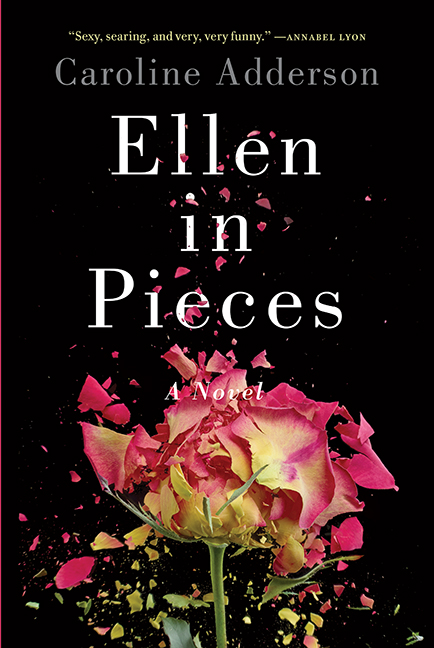
Ellen in Pieces – Caroline Adderson

The last few months of my reading life have been bereft of a key ingredient: actual reading. I was having a hard time finding books, reading them, and finishing them. Not sure if I’ve found my way. Books have been the one constant in my life and, yet, I have so little time for reading. Caroline Adderson’s wonderful Ellen in Pieces put a spring in my step, and not just because it’s the first book in a long time that I’ve read cover-to-cover in a super-short period of time. It’s the perfect kind of book for a weekend afternoon of reading when your kid is ensconced in watching some Disney movie you’ve already listened to a million times. You will fall into this book and feel at various moments that, for a woman of a certain age, living a certain life, with or without children, Adderson has seen right into your life.

Forgive me for allowing that the “pieces” of the title refer to the book’s non-linear format. It slips back and forth through time and up and down different points of view. It’s disconcerting at moments, not because the book doesn’t make sense or the parts beyond the novel’s central character, Ellen, are lacking, but simply because I loved that character so much I resented those other voices, the other perspectives. But no one lives their life in a vacuum, and when you hear about Ellen from her best friends, from her cad of an ex-husband, from her young lover, from her children, it adds layers upon layers to a life already rich with mistakes, misgivings, happiness, and wild abandon.

And I’m taking lessons from reading The Empathy Exams, which is another book that I managed to actually finish these days–polar opposite to a book of fiction written in Canada–but there’s a central thesis in one of Jamison’s essays that touches upon the state of “female pain.” It’s a very worthwhile essay to contemplate, for many reasons, not the least of which is an insistence, ever so slight, that despite the tropes around the idea of women in pain, these kinds of stories exist, they are our stories, and we should claim them. I am paraphrasing, badly, but I was thinking about this, desperately, over the last couple weeks, and found that pain resonates throughout Ellen in Pieces, whether it’s the pain of your own broken dreams, of broken relationships, of failed friendships, of mother-daughter bonds–really, simply, of life itself.

Novels about women who have breast cancer are a dime a dozen. I can think of a few off the top of my head that made me want to punch a wall for how obviously they were manipulating both the idea of loss and the illness itself. I can think of one other book that I’ve read in recent memory where illness wasn’t a device but a wonderful, necessary part of the story (Lionel Shriver’s So Much For That). Let’s put the SPOILER tag in here now… Here, Ellen’s breast cancer doesn’t feel manipulative. It’s not maudlin, and it’s not melodramatic. But what’s also interesting is that is the moment that Adderson skips Ellen’s point of view and begins to tell the story from the perspective of the other characters. I missed Ellen through the second half of the book. I missed her raw, angry, and sometimes unforgiving voice. I also missed her energy, her motion, and her voice. She’s a great character, and I wished, in a way, that Adderson had at least continued to show us her own thoughts during her illness. But then maybe I’d be missing the point. Because what her death allowed was the rejuvenation of so many people in her life, her eldest daughter in particular; and it stopped the book from turning me completely into a puddle. There are many voices in this book, each crowding to the surface to show ordinary life at its most extraordinary. Still, the true heralding success of this novel, for me anyway, has to be the author’s voice–it’s rich, symphonic even, and had me from the first page. It’s a rare feat these days, finding a book that can cut through my exhaustion, my own trials and tribulations of being a middle-aged mum, and bring me out the other side sad that it’s over because I’ll have to return to my seemingly never-ending unreading-reading state.